  1
  2
  3
  4
  5
  6
  7
  8
  9
 10
 11
 12
 13
 14
 15
 16
 17
 18
 19
 20
 21
 22
 23
 24
 25
 26
 27
 28
 29
 30
 31
 32
 33
 34
 35
 36
 37
 38
 39
 40
 41
 42
 43
 44
 45
 46
 47
 48
 49
 50
 51
 52
 53
 54
 55
 56
 57
 58
 59
 60
 61
 62
 63
 64
 65
 66
 67
 68
 69
 70
 71
 72
 73
 74
 75
 76
 77
 78
 79
 80
 81
 82
 83
 84
 85
 86
 87
 88
 89
 90
 91
 92
 93
 94
 95
 96
 97
 98
 99
100
101
102
103
104
105
106
107
108
109
110
111
112
113
114
115
116
117
118
119
120
121
122
123 | #!/usr/bin/env python3
from betfsm import (
TickingStateMachine, Sequence, ConcurrentSequence,
Message, SUCCEED, TICKING, CANCEL, Generator, Blackboard,
Repeat, Fallback, TimedWait, Concurrent, TimedRepeat,
to_graphviz_dotfile, get_logger, Runner
)
class CountDown(Generator):
"""
A simple generator state that counts down from a given number.
"""
def __init__(self, name, count):
super().__init__(name, [SUCCEED])
self.count = count
def co_execute(self, blackboard):
for i in range(self.count, 0, -1):
get_logger().info(f"{self.name}: {i}")
yield TICKING
get_logger().info(f"{self.name}: Finished counting down!")
yield SUCCEED
class CancelingState(Generator):
"""
A state that returns CANCEL after one tick.
Used to demonstrate Fallback.
"""
def __init__(self, name,count):
super().__init__(name, [CANCEL])
self.count = count
def co_execute(self, blackboard):
get_logger().info(f"{self.name}: I am going to cancel after {self.count} ticks...")
for i in range(self.count):
yield TICKING
get_logger().info(f"{self.name}: Canceling now!")
yield CANCEL
"""
An example of a reusable adaptation:
"""
class CountDownWithDelay(TimedRepeat):
def __init__(self,name,count, delay):
self.msg = Message(msg=f"{name} counting down")
super().__init__(name, count, delay, self.msg)
def main():
# if you like to log all entry, doo and exit's of all the tickingstates:
# set_logger("state", LogPrinter())
# Create a blackboard
bb = {}
# 1. Example Sequence
# This will execute its children one after another.
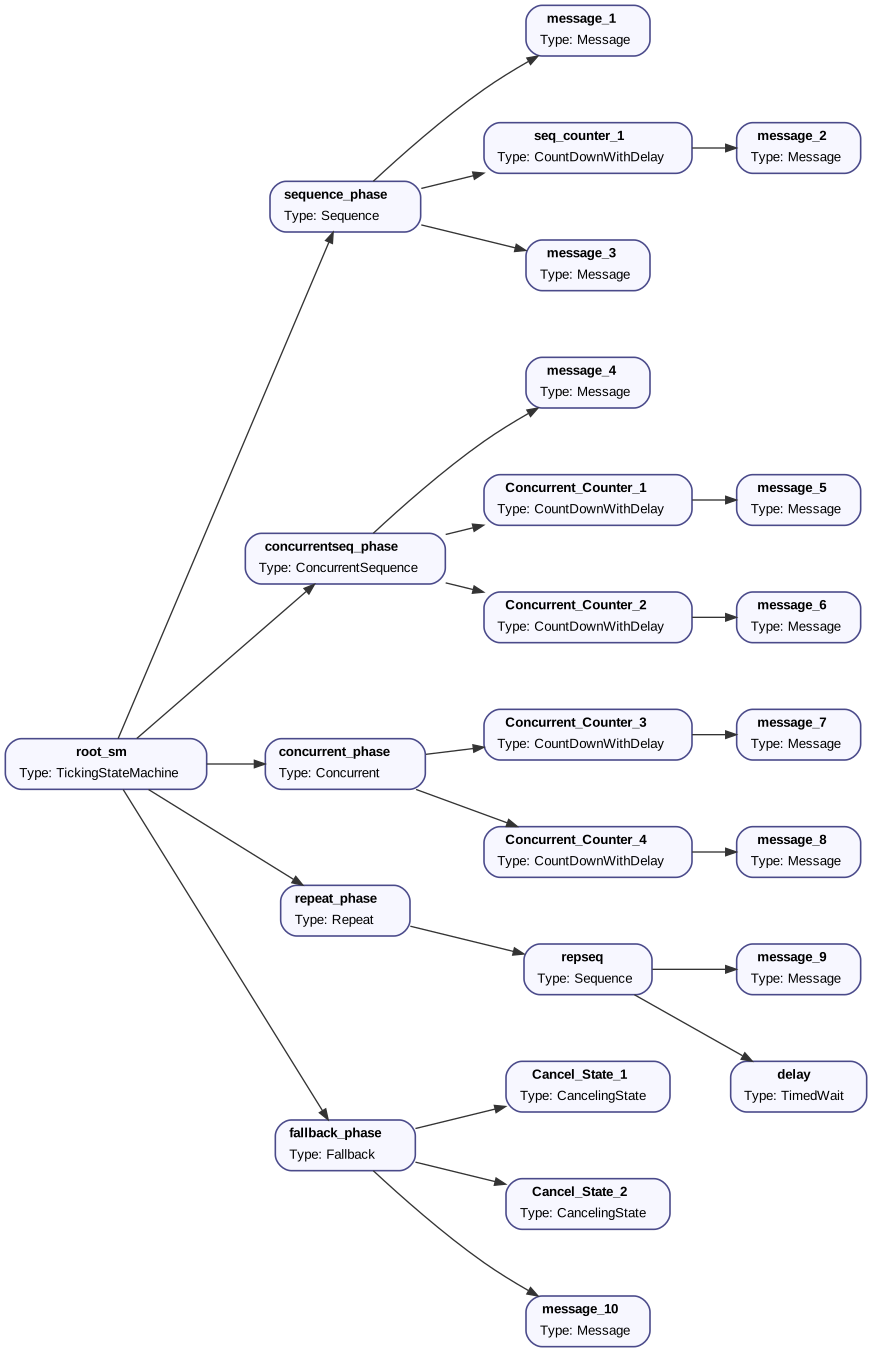
seq = Sequence("sequence_phase", [
Message(msg="--- Starting Sequence Phase ---"),
CountDownWithDelay("seq_counter_1", 6, 1.0),
Message(msg="--- Sequence Phase Finished ---")
])
# 2. Example ConcurrentSequence
# This will execute its children concurrently.
# It succeeds when ALL children succeed.
conc_seq = ConcurrentSequence("concurrentseq_phase", [
Message(msg="--- Starting ConcurrentSequence Phase ---"),
CountDownWithDelay("Concurrent_Counter_1", 5, 1.5),
CountDownWithDelay("Concurrent_Counter_2", 3, 4.0),
])
# 3. Example Concurrent
# This will execute its children concurrently.
# It succeeds when one of the children succeeds.
conc = Concurrent("concurrent_phase", [
CountDownWithDelay("Concurrent_Counter_3", 5, 1.5),
CountDownWithDelay("Concurrent_Counter_4", 3, 4.0),
])
# 4. Example Repeat
# Repeats the underlying state N times.
rep = Repeat("repeat_phase", 3, Sequence("repseq",[Message(msg="--- Repeating Message (3 times) ---"), TimedWait("delay",1.0)]))
# 5. Example Fallback : execute until one in the list succeeds.
# Tries children in order. If one returns CANCEL, it tries the next.
# If one returns anything else (e.g. SUCCEED), it returns that and stops.
fallback = Fallback("fallback_phase", [
CancelingState("Cancel_State_1",30),
CancelingState("Cancel_State_2",20),
Message(msg="Fallback recovered! (This message runs because previous states CANCELED) Since it returns SUCCEED, the whole fallback return SUCCEED.")
])
# 6. State Machine Definition
# Define the possible outcomes of the SM.
sm = TickingStateMachine("root_sm", [SUCCEED])
# Add the states to the State Machine and link them
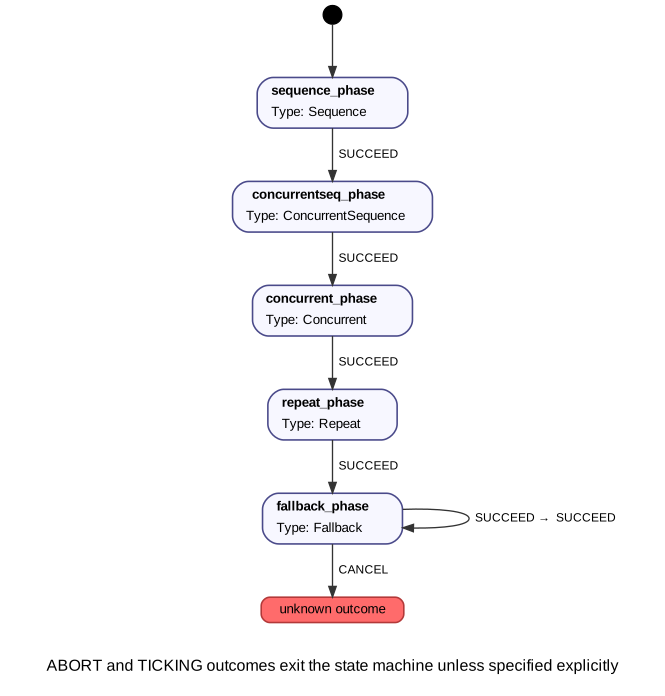
sm.add_state(seq, transitions={SUCCEED: conc_seq}) # you can refer to a state by its instance
sm.add_state(conc_seq, transitions={SUCCEED: conc})
sm.add_state(conc, transitions={SUCCEED: rep})
sm.add_state(rep, transitions={SUCCEED: "fallback_phase"}) # you can also refer to a state by its name
sm.add_state(fallback, transitions={SUCCEED: SUCCEED}) # If fallback succeeds (returns SUCCEED), SM finishes.
# if the value in the transitions map is an outcome, it indicates that the statemachine exits.
# Set the initial state
sm.set_start_state("sequence_phase")
# Alternative to the state machine (much shorter):
#sm = Sequence("application",[seq, conc_seq, conc, rep, fallback])
# 7. Run it using BeTFSMRunner at 100 Hz
# display_active == True if you'd like to log all active states
runner = Runner(sm, bb, frequency=100.0,publish_frequency=5,display_active=False, serve=False) # Hz
print("Running State Machine...")
outcome = runner.run()
print(f"State Machine Finished with outcome: {outcome}")
if __name__ == "__main__":
main()
|
 ]
]